


The Real Value in Crypto: Beyond the Hype - A Deep Dive into Cryptocurrencies with Actual Utility
- Medicine Wolf

- Jan 2
- 9 min read
The cryptocurrency landscape has matured significantly, yet the space remains plagued by a fundamental challenge: distinguishing legitimate technological innovation from speculative fever dreams.
This essay explores the cryptocurrencies that matter - those backed by genuine technological breakthroughs, real-world utility, and tangible economic models. It also examines the Trump administration's unprecedented move to legitimize crypto as a strategic asset.
Part I: The Trump Effect - Crypto Becomes Strategic
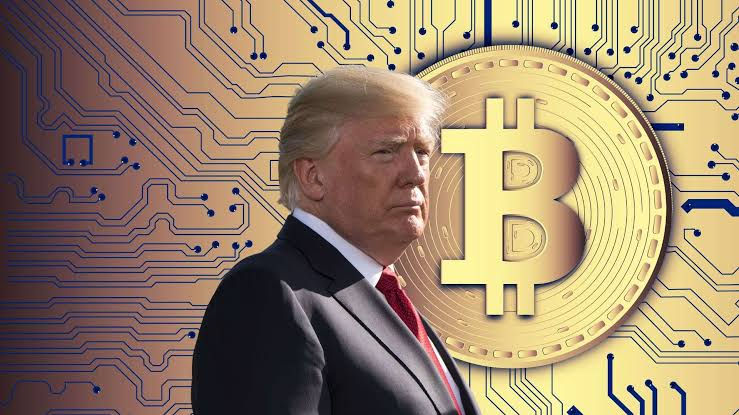
On March 6, 2025, President Donald Trump signed an executive order that fundamentally shifted how governments view cryptocurrency. The order established the Strategic Bitcoin Reserve and U.S. Digital Asset Stockpile marking the first time the U.S. government officially designated a cryptocurrency as a strategic national reserve asset.
The Reserve's Scale and Significance
The Trump administration announced plans to hold approximately 207,000 Bitcoin (worth ~$17 billion as of March 2025) in secure Treasury custody seized from criminal forfeiture proceedings.
Separately, a digital asset stockpile for non-Bitcoin tokens was created, specifically targeting Ethereum, XRP, Solana, and Cardano. The administration framed this explicitly: Bitcoin as "digital gold" a fixed supply of 21 million coins that has never been "hacked," backed by immutable cryptographic proof-of-work.
More ambitiously, the BITCOIN Act proposes direct Treasury purchases of up to 1 million Bitcoin over five years, which would represent approximately 5% of Bitcoin's total supply mirroring the scale of the U.S. gold reserve.
Senate Bill 3 and complementary legislation signal that this is not a temporary positioning, but a multi-administration strategy to position the U.S. as the "crypto capital of the world."
What This Actually Means
This is not a fringe policy. The move is undergirded by concrete institutional shifts: SEC leadership changes, pro-crypto regulatory frameworks, and federal custodial infrastructure. It legitimizes crypto not as speculative gambling, but as strategic collateral akin to petroleum reserves, gold, and pharmaceuticals. This has cascading implications for institutional adoption and valuation, as major institutions and sovereign wealth funds follow the U.S. government's lead.
Part II: Cryptocurrencies with Real Technology and Utility
Tier 1: The Pillars - Technologies with Proven Consensus Mechanisms

Bitcoin (BTC) - The Original Breakthrough
Bitcoin remains the foundational innovation. Satoshi Nakamoto's 2008 whitepaper solved a century-old problem: how to achieve consensus in a decentralized network without a trusted authority, using Proof of Work. The network timestamps transactions by hashing them into an ongoing chain, making alterations computationally impractical. After nearly 16 years of operation without a single successful consensus break, Bitcoin's security assumptions have been validated by both time and an adversarial market.
Function: Digital money; store of value; decentralized consensus mechanism.
Utility: Irreversible transactions; pseudonymity; absolute scarcity (21 million cap).
Why it matters: Serves as the base layer for all subsequent crypto innovation and now as a strategic reserve asset.

Ethereum (ETH) - Smart Contracts as Infrastructure
Ethereum introduced the first production-grade Turing-complete virtual machine (EVM) on a blockchain, enabling arbitrary smart contracts and decentralized applications (dApps). Unlike Bitcoin's scripting limitations, Ethereum permits sophisticated financial logic: lending protocols, derivative markets, governance systems, and more.
Function: Programmable blockchain; dApp platform; DeFi backbone.
Consensus: Originally Proof of Work; transitioned to Proof of Stake (The Merge, 2022), reducing energy consumption by >99%.
Scale: Native network processes ~15 TPS; layer-2 solutions (Arbitrum, Optimism) achieve thousands of TPS.
Why it matters: Over $200 billion in DeFi value locked; dominant platform for tokenized assets and autonomous financial systems.

Solana (SOL) - Speed Through Innovation
Solana introduced Proof of History (PoH), a breakthrough that cryptographically verifies passage of time without external timestamps. This enables a single Leader to sequence transactions, with verifiers voting on state commits in parallel across 4,000+ CPU cores. The result: theoretically 710,000 transactions per second with sub-second finality.
Function: High-throughput blockchain; gaming and NFT infrastructure; DeFi scaling.
Consensus: PoH + Proof of Stake hybrid.
Key innovation: PoH timestamps allow GPU-based parallel verification (~4,000x faster than generation). The network recovers from network partitions via dynamic validator unbonding rates that favor the larger partition, solving liveness elegantly.
Why it matters: Achieves "web-scale" transaction throughput while maintaining Byzantine fault tolerance.
XRP Ledger (XRP) - Low-Latency Consensus
The XRP Ledger uses a Byzantine Fault Tolerant consensus protocol that does not require proof-of-work or stake commitment. Instead, nodes choose a Unique Node List (UNL) of trusted peers, and consensus requires >80% quorum within overlapping trust sets.
Function: Cross-border payments; currency settlement; interledger bridge.
Consensus: XRP Ledger Consensus Protocol (XLCP) - Byzantine Fault Tolerant with partial network agreement.
Trade-off: Requires ~90% UNL overlap for safety under the general fault model (not assuming Byzantine accountability). This is stricter than Bitcoin's 51% threshold, trading off decentralization for latency and finality guarantees.
Why it matters: Achieves sub-second settlement for international payments - a genuine alternative to SWIFT for liquidity providers.

Cardano (ADA) - Peer-Reviewed Rigor
Cardano distinguishes itself through formal peer-reviewed development. Every protocol upgrade undergoes academic scrutiny before deployment. It uses Proof of Stake consensus via the Ouroboros protocol.
Function: Programmable blockchain; emerging DeFi and NFT ecosystem; government/enterprise use cases (e.g., French military).
Governance: Decentralized via CARP framework and governance mechanisms that allow stakeholders to vote on protocol changes.
Why it matters: Demonstrates that rigorous academic development and decentralization can coexist.
Tier 2: Infrastructure and DeFi - The Plumbing of Crypto Finance

Cosmos (ATOM) - Interoperability at Scale
Cosmos is not a single blockchain but a network of blockchains. The Cosmos Hub acts as a central ledger connecting independent zones (sidechains) via Inter-Blockchain Communication (IBC) protocol essentially "TCP/IP for blockchains."
Function: Cross-chain communication; horizontal scaling; ecosystem interoperability.
Consensus: Tendermint BFT (Byzantine Fault Tolerant). Achieves 1,000+ TPS with 1-2 second commit latency through cryptographic voting (not PoW).
Key strength: Enables any blockchain (PoW, PoS, or custom) to connect as a zone while maintaining security guarantees. Tokens move seamlessly between zones via the Hub.
Why it matters: Solves the fragmentation problem instead of competing L1 blockchains, Cosmos enables cooperative ecosystems.

Aave (AAVE) - Decentralized Lending at Scale
Aave is a non-custodial liquidity protocol where users supply assets to earn interest, and borrowers access liquidity by posting over-collateralized collateral.
Function: Lending/borrowing; decentralized finance infrastructure; yield generation.
Scale: $12+ billion in assets under management across 14+ blockchain networks.
Key innovations:
- Efficiency Mode (E-Mode): Higher loan-to-value for correlated assets (e.g., stablecoins), enabling up to 8x leverage for yield farming.
- Isolation Mode: Safely lists volatile assets without systemic risk by isolating borrowing to specific stablecoins.
- Risk Management: Health Factor tracking prevents liquidation cascades; governance-controlled parameters.
Governance: AAVE token holders vote on protocol changes, risk parameters, and new collateral assets.
Why it matters: Aave is the backbone of DeFi nearly all sophisticated yield strategies depend on its liquidity pools.

Sky Protocol (MKR) / Dai—Decentralized Stablecoins
Sky (formerly MakerDAO) pioneered decentralized stablecoin creation. Users lock cryptocurrency collateral into Vaults and mint Dai (or USDS, the new version) stablecoins soft-pegged to $1 USD.
Function: Stablecoin creation; collateral-based lending; decentralized money market.
Innovation: Real World Assets (RWAs). Sky now accepts tokenized real estate, bonds, and loans as collateral bridging traditional and decentralized finance.
Governance: MKR token holders vote on risk parameters, collateral types, liquidation ratios, and stability fees. The Dai Savings Rate (DSR) allows holders to earn yield on Dai holdings themselves.
Why it matters: First major DeFi protocol to achieve scale ($7B+ Dai in circulation) without relying on centralized reserves.

Jupiter (JUP) - Solana's DeFi Aggregator
Jupiter is the dominant decentralized exchange (DEX) aggregator on Solana, routing trades through multiple liquidity venues to minimize slippage and maximize execution quality.
Function: DEX aggregation; trade routing; MEV mitigation.
Scale: $2 trillion+ in lifetime volume; 500+ protocol integrations; 1 million+ daily active users.
Key capability: MEV (maximum extractable value) mitigation routing prevents front-running and sandwich attacks. Plugin and API options enable seamless integration into wallets and other dApps.
Why it matters: As Solana's primary liquidity hub, Jupiter is essential infrastructure for DeFi on the fastest major blockchain.
Tezos (XTZ) - Self-Amending Blockchain
Tezos enables on-chain governance where stakeholders vote to upgrade the protocol itself without contentious hard forks. The network can evolve consensus rules, virtual machines, and economic parameters through governance votes.
Function: Self-upgradeable blockchain; PoS consensus; NFT and DeFi platform.
Innovation: Formal verification of smart contracts; multiple programming languages (Michelson, LIGO, Cameligo); Smart Rollups for scaling to ~1 million TPS.
Enterprise adoption: French military uses Tezos for recording judicial expenses; Société Générale piloted CBDCs on Tezos.
Why it matters: Demonstrates that on-chain governance can enable rapid iteration without fragmenting the community.
Tier 3: Specialized Technologies - Emerging Utility
Stacks (STX) - Bitcoin Smart Contracts
Stacks is a Layer 2 solution for Bitcoin, enabling smart contracts and DeFi on Bitcoin's immutable, secure base layer.
Function: Smart contracts on Bitcoin; settlement on Bitcoin; decentralized oracle network.
Technology: Proof of Transfer (PoX) consensus ties validator rewards to Bitcoin block production. The Nakamoto upgrade (2025) improves performance and programmability.
Why it matters: Extends Bitcoin's utility from "store of value" to "smart contract platform" while maintaining Bitcoin's security model.

Fetch.ai builds autonomous AI agents for automation, trading, supply chain optimization, and energy management. Recently merged into the Artificial Superintelligence Alliance (ASI) with SingularityNET and Ocean Protocol.
Function: Decentralized AI; autonomous agents; machine-to-machine transactions.
Partnerships: Bosch, logistics companies, energy platforms; backed by major institutions.
Why it matters: Bridges AI and decentralized networks enabling trustless coordination between autonomous systems without centralized control.

Gnosis (GNO) - Prediction Markets
Gnosis enables decentralized prediction markets where participants forecast outcomes and trade on accuracy. Information aggregation through market mechanics often outperforms traditional forecasting.
Function: Information markets; decision-making infrastructure; forecasting platform.
Why it matters: Demonstrates that blockchain-based markets can incentivize accurate information disclosure at scale.

Polyswarm - Decentralized Threat Intelligence
Polyswarm is a decentralized marketplace for cybersecurity threat analysis. Security experts submit "micro-engine" workers that compete to identify malicious files and network traffic. Reputation-based incentives reward accuracy.
Function: Cybersecurity threat detection; decentralized bounties; expert verification.
Why it matters: Shows how blockchain can decentralize specialized expertise in cybersecurity, benefiting enterprises and consumers with broader threat coverage.
Part III: Stablecoins - The Often-Overlooked Infrastructure Layer
Stablecoins are not exciting and that's precisely why they're essential. Unlike volatile cryptocurrencies, stablecoins maintain a ~$1 peg through collateral backing or algorithmic mechanisms. They enable fast, low-cost transfers while maintaining value stability for DeFi protocols, merchants, and individuals.

USDC (Circle) - The Institutional Standard USDC is backed 1:1 by U.S. dollars held in insured bank deposits. Circle, the issuer, publishes monthly attestations confirming reserves. It's the primary stablecoin used in institutional DeFi and regulated crypto platforms.
Tether (USDT) - Market Dominance
Tether is the largest stablecoin by market cap (~$120B), though it has faced scrutiny over reserve opacity. It trades on every major exchange and provides the highest liquidity for crypto/fiat pairs.
Circle's euro-backed stablecoin, targeting institutional adoption in Europe, particularly among central banks exploring CBDCs.
Why they matter: Without stablecoins, DeFi would collapse. They enable yield farming without currency risk, provide on-ramps for unbanked populations, and serve as settlement layers for international transactions.
Part IV: What Separates the Legitimate from the Hype
A cryptocurrency earns the label "legitimate" if it demonstrates:
1. Real Technology: Solves a genuine problem (consensus, computation, information aggregation).
2. Proven Security: Has operated without exploitable consensus breaks; cryptographic properties are validated.
3. Economic Model: Token design aligns incentives (validators are rewarded for honesty; users pay for resources; governance tokens have voting rights).
4. Ecosystem Adoption: Used by institutions, protocols, and individuals for genuine purposes not just trading.
5. Governance Legitimacy: Decentralized decision-making, not controlled by founders or a small coalition.
Bitcoin, Ethereum, Solana, Cosmos, Cardano, and Tezos meet all these criteria. They've survived market crashes, regulatory scrutiny, technical audits, and academic peer review.
Aave, Sky, Jupiter, and Stacks demonstrate how crypto infrastructure becomes indispensable because you can't build modern DeFi without them.
Fetch.ai , Gnosis, and Polyswarm represent the next frontier - applying decentralized incentives to AI, forecasting, and cybersecurity.
Stablecoins are the unglamorous plumbing that makes everything else work.
Part V: The Strategic Dimension - Trump's Bitcoin Reserve
Trump's Strategic Bitcoin Reserve elevates crypto from asset to geopolitical tool.
By accumulating Bitcoin, the U.S. is signaling:
1. De-dollarization Hedge: As nations explore digital alternatives to the dollar (China's digital yuan, etc.), U.S. Bitcoin holdings serve as a counter-move.
2. Monetary Sovereignty: Bitcoin's fixed supply contrasts with fiat currency inflation, positioning it as a store of value for national reserves.
3. Tech Leadership: Legitimizing crypto within U.S. policy elevates American tech companies (Coinbase, MicroStrategy, etc.) and signals support for blockchain innovation.
4. Institutional Acceleration: When the U.S. government becomes a Bitcoin holder, it removes regulatory uncertainty for corporations and pension funds.
This is not merely symbolic it reflects a broader understanding that cryptocurrency infrastructure is as strategically important as semiconductors or energy.
Conclusion: The Real Crypto Revolution
The crypto revolution was never about replacing fiat currency overnight or making early adopters billionaires. It was about building financial and computational infrastructure that doesn't require trust in a single entity a genuinely new paradigm.
Bitcoin proved it's possible. Ethereum showed it's extensible. Solana demonstrated it can be fast. Cosmos proved blockchains can interoperate. Aave built trillion-dollar protocols on top. Fetch.ai is integrating AI. Stable-coins provide the unexciting layer that makes everything work.
The cryptocurrencies with real value aren't distinguished by marketing hype or celebrity endorsements. They're distinguished by sound cryptography, proven consensus mechanisms, genuine utility, and institutional adoption**—precisely the criteria that elevated Bitcoin and Ethereum from fringe experiments to strategic national assets worth trillions.
The Trump administration's Strategic Bitcoin Reserve validates what the research had always shown: crypto isn't a bubble to pop. It's infrastructure to build upon.
The only question now is whether you understand the difference between the tools and the hype.


Comments